 Policyholder Pulse






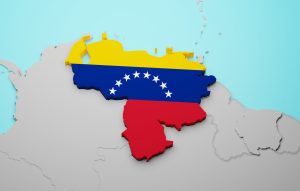 The geopolitical drama unfolding with respect to Venezuela is loaded with opportunity and fraught with political risk arising from both Venezuelan and U.S. government actions. The country is still headed by a regime the U.S. government officially does not recognize, while a government that the United States does recognize stands on the outside seeking U.S. support to assume the reins. The President has stated that the U.S. has assumed “control” of Venezuela—and invites U.S. businesses to make massive investments on the ground—while the unrecognized Venezuelan government oscillates between official rejection and cooperation with U.S. political initiatives. Moreover, Venezuela has a history of expropriating assets, particularly in the oil and gas sector, and many state-owned companies have defaulted on significant payables to service companies that are essential participants in the efforts to rebuild and restore the Venezuelan infrastructure and economy.
Faced with such uncertainty, how might a U.S. business interested in making Venezuelan investments mitigate its risks? Political Risk Insurance is one way to help mitigate risk.
Mitigating Risk Through Bespoke Political Risk Insurance
Part of the answer lies in political risk insurance (PRI). Historically seldom tapped, PRI offers specialized coverage for enterprises and assets situated in political hotspots, typically covering specific named perils, which may include, among other things: (1) expropriations, confiscation or nationalization of entities or assets by governmental authorities; (2) breach of contract by government entities, sovereign payment defaults, or frustration of contracts by governmental action; (3) political violence, including war, civil unrest, and terrorism; and (4) trade sanctions, embargoes, seizures, and forced abandonments. Coverage may extend to supply chain disruptions arising from these political risks.
Historically available primarily through multilateral agencies such as MIGA (the Multilateral Guarantee Investment Agency, a unit of the World Bank) and OPIC (the Overseas Private Investment Corporation, now the U.S. International Development Finance Corporation), insurance for political risks is now also offered through major private insurers and conventional brokers. Limits exceeding $100 million are often underwritten and will likely be necessary to support significant investments in Venezuela’s infrastructure, which currently suffers from decades of underinvestment and deferred maintenance.
PRI is not all boilerplate. Commonly, policies are written on negotiated terms or specific insuring language is selected from available alternatives. Familiarity with the most commonly used terms, and how they have been interpreted at law, is essential to ensure that the policyholder obtains the full scope of coverage it intended. While disputes under PRI policies are usually decided in arbitral proceedings—which are confidential and therefore do not produce precedents—they use policy terms that have occasionally been subject to judicial interpretation in other contexts (more on ADR and choice of law to come in later posts). For example, language defining covered or excluded political events like war or terrorism has sometimes been defined in the context of aviation, marine or property insurance. Importantly, whether the same term is used in an insuring clause or an exclusion may have a significant bearing on its proper interpretation. Likewise, ambiguous language or geographic exclusions may undermine or defeat the chances of recovery when political events disrupt supply chains indirectly, and the applicant will be asked to provide information on the project, the participants, the known commercial and regulatory status, and other facts. It is as essential to obtain sound and informed legal advice when negotiating coverage as when pursuing claims for losses.
It remains to be seen how insurance markets will respond to the evolving political environment in Venezuela. For now, many PRI policies may exclude coverage for risks associated with Venezuela. Until there is greater certainty about the shape of the Venezuelan government going forward and the policies it is likely to adopt, private insurers may balk at underwriting Venezuelan risks, or may specifically exclude Venezuela from the geographic scope of coverage (highly risky countries are already commonly excluded anyway). We expect that to come into focus over the coming months. Companies considering business in Venezuela are well advised to start exploring the availability of coverage early to mitigate their risks and ensure that the terms and coverage are carefully analyzed by a coverage lawyer.
Coverage for Political Risks Embedded in Standard Lines of Insurance
Even outside dedicated PRI, many other lines of coverage may offer coverage for specific political risks within their lanes of insurance. Species of political risk insurance can be found in policies or available endorsements in many lines of coverage, including:
- marine, marine cargo, aviation, and loss in transit insurance;
- supply chain risk and contingent business interruption insurance;
- kidnap and ransom insurance;
- insurance for crisis management expenses; and
- directors and officers insurance.
Many policies contain an exclusion for losses arising from war, revolution, rebellion, insurrection, civil unrest or terrorism, but some insurers offer a separate endorsement explicitly restoring that coverage for additional premium. Moreover, Venezuela is frequently contained in a list of excluded territories. Companies initiating operations in Venezuela, providing services to Venezuelan companies, purchasing oil, gas and other goods and products from Venezuela, or otherwise contracting with companies in Venezuela, should take stock of the insurance they already have and assess whether it needs to be updated or improved to specifically cover claims arising in Venezuela if and when the insurance market makes it available. A more fulsome discussion of additional insurance coverage will be the subject of future blog posts.
Conclusion
Businesses exist to capitalize on risk. Indeed, one definition of “enterprise” is “a project or undertaking that is especially difficult, complicated, or risky.” The proposition for doing business in Venezuela today is a poster child for that definition. Political risk insurance—in all its forms—offers a way to help meet and mitigate this challenge. But with the stakes this high, it is important not only to ensure that you have the right lines of insurance, but to negotiate optimal terms before proceeding. Obtaining informed and experienced legal counsel is an important first step.