 Policyholder Pulse





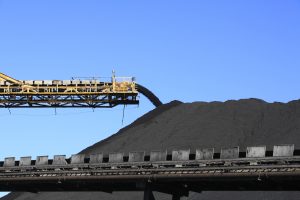 Ramaco got the coal moving again in weeks. Its insurers took years to pay. Under West Virginia’s Hayseeds rule, the cost of that wait can give rise to a separate and substantial recovery.
Policyholders and insurers alike should take note.
In September 2026, a jury awarded awarded Ramaco Resources LLC $30 million against Federal Insurance Company and ACE American Insurance Company, two Chubb carriers, for losses associated with delayed payment of a covered property claim. Of that amount, $27.5 million represents net economic loss and $2.5 million represents aggravation and inconvenience. The insurers had already paid the underlying policy judgment; the court still must decide attorneys’ fees.
Business Income Follows Profit, Not Just Output
The coverage question began with a partial collapse of a coal storage silo that fed Ramaco’s Elk Creek preparation plant in November 2018. Ramaco maintained that an unexpected blockage of coal caused the failure; Federal ultimately denied Ramaco’s insurance claim, attributing the collapse to corrosion. While Federal’s investigation was pending, Ramaco installed a temporary bypass that restored most of the plant’s capacity by late November. But this partial workaround did not return Ramaco’s business to its expected financial position due to the increased labor and processing it required.
Ramaco sued to recover lost business income and extra expense under its policy, along with damages for delayed payment.
At trial in 2021, a jury first decided coverage and damages under the policy. It found the collapse covered and awarded Ramaco approximately $7.1 million in contract damages plus $500,000 in prejudgment interest. After trial, however, the district court reduced that total to about $1.8 million. It concluded that the policy’s “period of restoration” ended when coal throughput recovered in November 2018, excluding later losses.
That difference between capacity and earnings mattered under the business income wording. The Fourth Circuit rejected a throughput-only measure: It concluded the policy looked to the level of operations that would have generated the net profits Ramaco would have earned absent the collapse, not just the output level during the period of disruption. Because the temporary bypass raised Ramaco’s costs, equal output did not mean equal profit; increased costs could keep profits below that level even after output recovered. The appeals court therefore reinstated the jury’s original $7.6 million award, which included Ramaco’s losses through March 2019, when it began operating a permanent bypass system.
A Covered Claim Creates a Second Timeline
That coverage victory opened a different question: What did Ramaco lose while it waited for payment? Under West Virginia’s Hayseeds rule, a policyholder that substantially prevails in a property damage suit against its insurer can also recover reasonable attorneys’ fees, net economic loss caused by delayed settlement, and damages for aggravation and inconvenience.
In Hayseeds, a fire destroyed a building that had housed the owners’ restaurant and later served as a warehouse for their video-game business. State Farm denied coverage because it suspected the owners had set the blaze. A jury awarded $150,000 under the policy, $69,000 in attorneys’ fees and consequential damages, and $50,000 in punitive damages. West Virginia’s highest court upheld the coverage and compensatory awards but reversed the punitive award because the evidence did not establish actual malice.
The remarkable result in Hayseeds was that the compensatory portion of the award included coverage for consequential damages such as aggravation and inconvenience resulting from the delay in paying proceeds due under the policy, not just the withheld insurance proceeds themselves. The court reasoned that an insured should not have to spend its insurance recovery on the litigation needed to obtain it. And receiving policy proceeds years after a claim does not necessarily erase additional losses the insureds suffered while waiting for the recovery. Accordingly, under Hayseeds, even an insurer that has grounds to contest a claim may still owe for the harm caused by its delayed payment, once the policyholder substantially prevails in litigation. Notably, this compensatory remedy does not require proof of the insurer’s bad faith.
Applying these principles in Ramaco, the Fourth Circuit looked at the negotiations and the insurance recovery together and held that Ramaco had substantially prevailed, based on the reinstated $7.1 million loss and the parties’ negotiations for settlement prior to trial. However, the Fourth Circuit also rejected the 2021 jury’s award of $25 million for aggravation and inconvenience, under the theory that such an award appeared punitive rather than compensatory. The court of appeals instead remanded the case for a new trial, focused solely on the appropriate amount of Hayseeds damages.
Proving the Economic Cost of Delay
The 2026 retrial concerned Ramaco’s net economic loss during the period from July 2021 until payment in October 2023, as well as eligible aggravation and inconvenience damages.
One theory at the retrial concerned Ramaco’s claim that payment of the policy proceeds would have helped it open its Eight Kay mine sooner. The insurers disputed the link between nonpayment and Ramaco’s investment decisions and pointed to other possible constraints, including coal market conditions and processing capacity. The district court allowed the theory to go to the jury but required Ramaco to prove causation and its losses with reasonable certainty. Ramaco’s claim also required an accounting for the value of coal still available to be mined, rather than treating all projected sales as permanently lost. A pretrial order left those factual questions for the jury, as well.
Following trial in September 2026, the jury awarded Ramaco a total of $30 million in Hayseeds damages: $27.5 million for net economic loss and $2.5 million for aggravation and inconvenience. Post-trial motions and/or an appeal may still affect the result. But for now, the insurers’ initial rejection of Ramaco’s $7.1 million claim has resulted in an additional judgment of more than four times that amount—all of which is compensatory, not punitive.
What Policyholders Can Take from Ramaco
- Read the restoration provision. A return to production does not necessarily end business income loss when operating costs remain elevated. The policy’s language and the economic evidence control.
- Keep a clear claim and settlement record. The comparison between what the insured sought and what it recovered helped establish that Ramaco substantially prevailed.
What the Claim File Should Show
- Measure earnings as well as activity. If temporary repairs restore output but increase costs, keep the records needed to show the effect on net profits under the policy’s restoration language.
- Record decisions made while payment is pending. Preserve budgets, financing options, board materials, production plans and market assumptions. They may help distinguish a loss caused by delayed insurance proceeds from one caused by unrelated business conditions.
- Separate each part of the claim. Document the policy benefits demanded, settlement offers and claimed delay losses. The Fourth Circuit considered the negotiations as a whole when deciding whether Ramaco substantially prevailed.
Ramaco illustrates the reach of Hayseeds: Even after the insurers paid the underlying coverage judgment, the consequences of delayed payment remained in dispute, and a coverage payment alone may not make a policyholder whole after years of delay. The practical lesson is to build the record for both timelines: what the physical loss did to the business, and what waiting for covered proceeds did next. The additional recovery here arose under West Virginia’s specific first-party property insurance rule and depended on proof of the claimed losses. Other policyholders must evaluate the remedies available under their own policies and governing law. Qualified insurance coverage counsel should be engaged early to ensure the record meets the policyholder’s requirements.