


Colleagues Joseph Jean and Meaghan Murphy recently authored a four-part series examining the myriad insurance considerations brought to the forefront by recent and ongoing events in Iran.
Part I – When Chokepoints Become Chokeholds
When trade routes detour, ports slow and sanctions tighten, the difference between a painful delay and an uninsured loss often comes down to a few lines of policy wording.
Part II – Business Interruption vs. the Supply Chain
Many BI and contingent BI disputes don’t turn on the headline event. They turn on the trigger: What, exactly, counts as a covered loss at a covered location caused by a covered peril.
Part III – Political Risk, Political Violence and the Sanctions Tripwire
Some losses don’t look like “property damage” at all. They look like government action, loss of control, blocked payments or a legal inability to perform. That’s where PRI/political violence wording—and sanctions clauses—do the heavy lifting.
Part IV – War Risks, Detention and the Courts
War-risk losses are rarely “mysteries.” They’re usually fights about ordinary words—“detainment,” “loss,” “costs,” “restraint,” “constructive total loss”—and about which section of a program pays when war is in the causal chain.
Pillsbury is helping clients navigate the shifting geopolitical, regulatory and economic landscape in Iran with informed insight and global perspective. Our experienced team of legal specialists, policy analysts, and former U.S. and UK government officials are actively monitoring the situation and providing integrated risk and response advice in connection with the immediate and long-term impacts of developments in the region.

 We are on the cusp of another milestone in the decades-long Montrose Chemical litigation, which has already yielded many important precedents in California on coverage for so-called “long-tail” pollution liabilities. “Long-tail” claims arise under historical comprehensive general, umbrella and excess liability policies for alleged pollution that was in progress through multiple policy periods—such as underground tank leaks, seepages from waste disposal impoundments, and similar occurrences taking place over time. Whether the so-called “qualified pollution exclusion” bars coverage for such long-tail claims is a question that has divided courts for decades. Now the California Supreme Court has agreed to hear a critical appeal that puts the interpretation of the qualified pollution exclusion in play—with potentially seismic impacts.
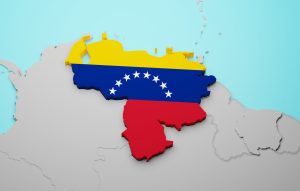 The geopolitical drama unfolding with respect to Venezuela is loaded with opportunity and fraught with political risk arising from both Venezuelan and U.S. government actions. The country is still headed by a regime the U.S. government officially does not recognize, while a government that the United States does recognize stands on the outside seeking U.S. support to assume the reins. The President has stated that the U.S. has assumed “control” of Venezuela—and invites U.S. businesses to make massive investments on the ground—while the unrecognized Venezuelan government oscillates between official rejection and cooperation with U.S. political initiatives. Moreover, Venezuela has a history of expropriating assets, particularly in the oil and gas sector, and many state-owned companies have defaulted on significant payables to service companies that are essential participants in the efforts to rebuild and restore the Venezuelan infrastructure and economy.
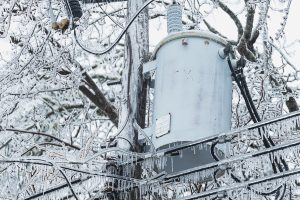 Over the weekend of January 24-25, 2026, Winter Storm Fern struck a vast swathe of the Eastern United States and Canada. The storm is likely to have had—and for some days to come will continue to have—a vast impact on businesses, governments and a host of human activities. According to

 Companies in certain industries have years and even decades of experience in defending and resolving “long-tail” liabilities for suits, claims and other proceedings—such as for asbestos-related disease or environmental-related third-party property damage—that involve bodily injuries or property damage spanning multiple years arising out of their historical operations.
 General and products liability policies are a cornerstone of risk management for businesses, providing protection against alleged liability because of bodily injury, property damage, and personal or advertising injury claims. These policies are often paired with self-insured retentions (SIRs). Although some policies with SIRs may provide “first dollar” coverage, particularly for defense costs, an SIR typically represents the amount of covered loss a company agrees to pay out of pocket before the primary layer insurer’s coverage attaches. While common, SIRs can introduce many traps for the unwary—especially if the SIR is applied on a “per-occurrence” basis (or, in some policies, a “per-claim” basis) without an aggregate cap.