 Policyholder Pulse


Colleagues Joseph Jean and Meaghan Murphy recently authored a four-part series examining the myriad insurance considerations brought to the forefront by recent and ongoing events in Iran.
Part I – When Chokepoints Become Chokeholds
When trade routes detour, ports slow and sanctions tighten, the difference between a painful delay and an uninsured loss often comes down to a few lines of policy wording.
Part II – Business Interruption vs. the Supply Chain
Many BI and contingent BI disputes don’t turn on the headline event. They turn on the trigger: What, exactly, counts as a covered loss at a covered location caused by a covered peril.
Part III – Political Risk, Political Violence and the Sanctions Tripwire
Some losses don’t look like “property damage” at all. They look like government action, loss of control, blocked payments or a legal inability to perform. That’s where PRI/political violence wording—and sanctions clauses—do the heavy lifting.
Part IV – War Risks, Detention and the Courts
War-risk losses are rarely “mysteries.” They’re usually fights about ordinary words—“detainment,” “loss,” “costs,” “restraint,” “constructive total loss”—and about which section of a program pays when war is in the causal chain.
Pillsbury is helping clients navigate the shifting geopolitical, regulatory and economic landscape in Iran with informed insight and global perspective. Our experienced team of legal specialists, policy analysts, and former U.S. and UK government officials are actively monitoring the situation and providing integrated risk and response advice in connection with the immediate and long-term impacts of developments in the region.

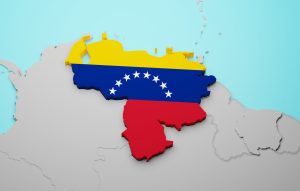 The geopolitical drama unfolding with respect to Venezuela is loaded with opportunity and fraught with political risk arising from both Venezuelan and U.S. government actions. The country is still headed by a regime the U.S. government officially does not recognize, while a government that the United States does recognize stands on the outside seeking U.S. support to assume the reins. The President has stated that the U.S. has assumed “control” of Venezuela—and invites U.S. businesses to make massive investments on the ground—while the unrecognized Venezuelan government oscillates between official rejection and cooperation with U.S. political initiatives. Moreover, Venezuela has a history of expropriating assets, particularly in the oil and gas sector, and many state-owned companies have defaulted on significant payables to service companies that are essential participants in the efforts to rebuild and restore the Venezuelan infrastructure and economy.
 In today’s volatile global economy, companies are learning the hard way that political shocks—whether through trade sanctions, military conflict or abrupt regulatory change—can wreak havoc on supply chains. And worse, many are discovering that their existing insurance coverage may not offer relief.

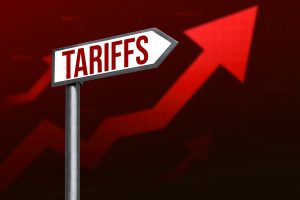 Since President Trump took office on January 20, 2025, the administration has implemented significant changes to U.S. trade policy, including most notably with respect to tariffs. Within weeks of taking office, the White House announced changes to tariffs on steel and aluminum which placed a tariff of 25% on all such imports. New tariffs were also separately imposed on imports from Canada, Mexico and China subject to certain exceptions. Then, on April 2, President Trump announced “reciprocal” tariffs on most imports from most countries, branding the day as “Liberation Day” and one of “American industry rebirth.” These tariffs, which include a 10% baseline rate and higher specific tariffs targeting China, Vietnam and the EU, among others, prompted heightened concerns about a trade war. Then, on April 9, President Trump announced that although the 10% baseline reciprocal tariff will remain effect, the higher reciprocal tariffs will be postponed for 90 days—except for China, for which the reciprocal tariff and duties are being increased to 105%, which are being applied in addition to prior 20% duties and the Section 301 duties.
 IKEA’s Billy bookcase—so popular that one is reportedly
  On
On