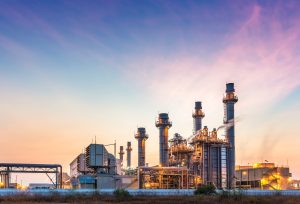
 Following the breakup of large utility holding companies by trust busters in the 1930s, General Electric created Ebasco (Electric Bond and Share Company), a construction company and consultancy that, among other things, assisted newly independent utilities throughout the United States to obtain broad excess-level occurrence-based liability insurance policies. These so-called Ebasco policies were attractive to utility policyholders because of their comprehensive insuring agreement, modest exclusions (e.g., no pollution exclusions), and the absence of aggregate limits. Illustratively, a $10 million Ebasco policy potentially could pay up to 20 times its limits (equivalent to $200 million) to fund cleanup of 20 contaminated sites, assuming an occurrence at each site happened during the policy period. For decades, Ebasco policies, primarily underwritten by London market insurers, have been the subject of litigation related to pollution, asbestos and human health claims.
Continue Reading ›






 Long a feature of directors’ and officers’ (D&O) liability insurance policies, the so-called “Bump-Up” Exclusion has gotten significant attention over the last few years. Because of the recent escalation in securities litigation that follows a majority of mergers and acquisitions, the Bump-Up Exclusion is of critical importance to publicly traded policyholders. Bump-Up Exclusion provisions are often found in a D&O policy’s definition of “Loss” and purport to exclude the amount of a settlement or judgment that represents an increase in the price paid to acquire an entity, where such consideration was alleged to be inadequate. A recent decision out of the Delaware state courts affirms again that D&O insurers will be held to the specific terms of their Bump-Up Exclusions.
 Courts don’t look kindly upon insurance company shell games. In

 Temperatures in Arizona this week reached
 The collapse of Silicon Valley Bank (SVB), the failure of Signature Bank, the close-call of First Republic, and the bailout of Credit Suisse had
  Generative AI is transforming our economy in previously unimagined ways, with Goldman Sachs