Look at virtually any COVID-19 case favoring an insurer, and you will find a citation to Section 148:46 of Couch on Insurance. It is virtually ubiquitous: courts siding with insurers cite Couch as restating a “widely held rule” on the meaning of “physical loss or damage”—words typically in the trigger for property-insurance coverage, including business-income coverage. It has been cited, ad nauseam, as evidence of a general consensus that all property-insurance claims require some “distinct, demonstrable, physical alteration of the property.” Indeed, some pro-insurer decisions substitute a citation to this section for an actual analysis of the specific language before the court.
In a new article in the Tort, Trial & Insurance Practice Law Journal, colleague Scott Greenspan and co-authors address the history and development of the “physical loss” rule, Couch’s distortion of it, and its impact on contemporary litigation. They also explore the correct rule, as explained in pre-and post-Couch precedent and in other treatises that more accurately state the law. Finally, the authors articulate the severe consequences that will follow for policyholders—banks, businesses, and homeowners—if Couch’s rule, continues to be blindly followed by courts without knowledge of its origins in legal quicksand.

 Do employees have a privacy right in the shape of their faces, the color of their eyes, or the texture of their fingertips? In many states, the law now says yes—leading employers to ask: Are resulting biometric privacy claims covered under their existing policies, or is insurance otherwise available?





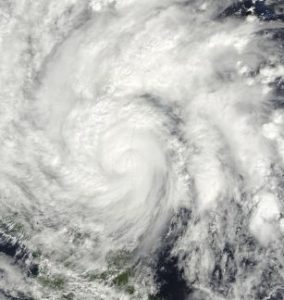 After hitting the shores of Louisiana with winds of up to
  As cybercrimes and data breaches continue to cause significant damage to companies of all types, policyholders are looking to their various insurance policies for coverage to help weather the storm and recoup losses. A recent decision by the U.S. Court of Appeals for the Fifth Circuit highlights the need for companies to review all of their policies for potential cyber-related coverage, including their CGL policies.
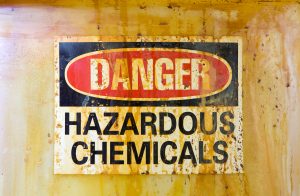 A key component of a company’s risk management function is to keep a close eye on new and developing sources of liability and to put in place appropriate insurance to respond in the event those liabilities ripen. In recent years, there has been a significant increase in legal and regulatory attention on per- and polyfluoroalkyl substances, more commonly known as “PFAS” or “forever chemicals.” PFAS are used in countless applications, and many companies across the country bear potential liability, from chemical companies to manufacturers to retailers to corporate end users. PFAS-related enforcement is focused on remedying impacts to both the environment and human health. Importantly, a company’s liability for PFAS-related contamination or bodily injury may be covered under historic general liability policies and/or modern-day pollution liability policies. As regulation and litigation relating to these ubiquitous substances continues to surge, corporate policyholders with potential exposure should be proactive to examine their insurance portfolios and position themselves for potential insurance coverage in the event they become a PFAS liability target.

 A feature of most corporate liability insurance programs is the tower system of coverage: a primary policy with several overlying excess policies stacked atop one another collectively providing coverage up to a desired (or available) limit of liability. Depending on the size and liability exposures of a policyholder, a tower can consist of dozens of policies providing limits totaling hundreds of millions of dollars. Adding to this complexity, excess policies often share layers of coverage in quota share arrangements, sometimes subscribing to the same policy but more often issuing separate policies for a stated percentage of the quota share whole. To avoid as much as possible an impenetrable web of conflicting coverage terms, excess policies often “follow form” to the underlying coverage (usually to the primary policy) providing the insurer certainty and providing the policyholder a consistent tower of coverage. It is not always possible, though, to obtain clarity and certainty in tower placements. Insurance companies issuing excess coverage may not wish to agree to all the terms included in the underlying policies, and so may offer additional or differing terms, creating inconsistencies in an otherwise monolithic tower. For example, a primary insurer may refuse to cover punitive damages whereas an excess insurer may agree to do so, or vice versa.
 Since July 9, 2021, New York City’s businesses have been subject to the
 The legal cannabis industry in the U.S. is growing at an unprecedented rate and is projected to reach