

Remember the “good” ol’ days when the run-of-the-mill theft involved someone physically taking something tangible? That is so 20th century. Now, thieves and fraudsters are able to use computers  and the internet to carry out much more complex schemes. The insurance industry has attempted to keep up with the technological evolution in the coverage it provides, but insurers have also used unclear policy language and the complexity and individualized nature of today’s fraudulent schemes to avoid covering the resulting losses. A slew of courts over the past few years have decided whether crime policies—particularly those with a computer fraud coverage component—cover complex, technology-related fraudulent schemes. The Eleventh Circuit recently joined the fray and ruled that computer fraud coverage did not apply to a policyholder’s $11 million loss.
Published on:
Eleventh Circuit Rules There Is No Coverage under Crime Policy’s Computer Fraud Component




 injury or property damage is excluded only if the insurer can demonstrate resulting damage was expected or intended by the insured. In
  reacts with oxygen to produce oxymyoglobin, and with carbon monoxide to form carboxymyoglobin before oxidizing into metmyoglobin—or, in other words, how quickly raw tuna meat turns from bright red (good) to brown (not so good). In the end, the court held, it doesn’t really matter—at least as to insurance coverage for advertising injury—unless the insurance company is given proper notice. And not just notice of a claim, but notice of the specific claim for which coverage is requested.
 For construction claims brought under CGL policies, that frequently means showing that the damages at issue constitute “property damage” caused by an “occurrence” (where “occurrence” is generally defined as “an accident”). While this requirement may often seem like a simple factual question, in the context of a subcontractor’s faulty workmanship, the analysis has proven more difficult. Where alleged faulty work causes damage only to the insured’s own work product, is the property damage accidental?
 Artificial Intelligence (AI) is a hot topic in industries from manufacturing to the medical profession. Developments in the last
 commits to a broad duty to defend the policyholder against any suits alleging claims that have a potential for coverage under the insurance policy. However, when a claim arises, insurers have a financial interest in trying to get off the hook. At times, policyholders need to turn to the courts for help reeling insurers in and forcing them to follow through with their commitments.
 investigation of claimed losses, but policyholders often do not fully understand the investigation process or coverage issues it raises. They may not review the policy requirements to understand their obligations with respect to the claims process. This post addresses insurance coverage considerations when the insurer wishes to investigate your claim for loss under a property policy.
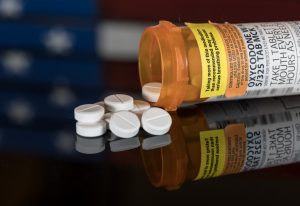 continues to devastate lives and communities across the United States. The extent and impact of opioid addiction are being examined and explained by experts in the field, and we aren’t trying to tackle that subject on an insurance blog. Instead, this post outlines the expanding breadth of opioid liability claims at every level of the industry, and insurance coverage considerations raised by these claims.
 d by category in the named insured’s subcontract. But before concluding you’ve got additional insurance, there’s another opinion you should know about. Around the same time, the U.S. Court of Appeals for the Second Circuit came to the opposite conclusion holding that an Additional Insured endorsement did not cover the University of Rochester Medical Center, even though the subcontract specifically provided that the University would be an additional insured, and Harleysville Insurance Co. therefore had no obligation to defend or indemnify it in a suit filed by an injured construction worker.