In what resembles a kabuki dance of sorts, insurers often fire off reservation of rights letters as an automatic response to any and all claims-related correspondence. A policyholder sends notice of circumstances that could give rise to a claim? Reservation of rights. A policyholder requests defense coverage? Reservation of rights.
A policyholder requests consent to settle with the underlying claimant? Reservation of rights.

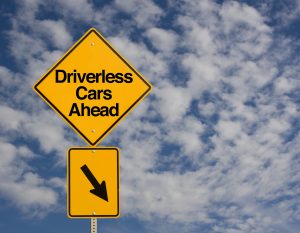
Robot Take the Wheel: Insurance Implications of Autonomous Vehicles
The era of the self-driving car has arrived, with the shiny promise of fewer auto collisions—and the inevitable potholes of a transformative technology. Despite the significant concerns raised by a recent accident involving a driver’s reliance on
a partially autonomous automatic braking and steering system on the Tesla Model S—one of 70,000 such vehicles now on the roads—the auto industry is roaring ahead with autonomous vehicles (AVs). Google is testing its driverless cars extensively on U.S. roads; General Motors has teamed up with car-sharing company Lyft to develop a driverless taxi service; and most major automakers will be releasing fully or partially autonomous vehicles in the next five years.

Use Contractor’s Pollution Liability Insurance to Clean Up Potential Gaps in Your CGL Coverage
As we edge further into the summer months, many contractors see an increase in work volume with longer days and universally better weather. That said, Mother Nature is not always predictable, and an unexpected storm can quickly lead to a flash flood, or other natural disaster that might result in what insurers may classify as a pollution event. Even something seemingly as innocuous as water run-off from a job site following a summer shower has the potential to result in a third-party claim against a contractor for damage.
Thus, it is imperative that contractors have the right pollution coverage in place to remain secure and profitable.

The Limits of Subrogation: Giving with One Hand Shouldn’t Mean Taking with the Other!
When an insurer pays a claim by its insured, it acquires a legal right to pursue a so-called “subrogation” claim against another party who may be responsible for the damage. But public policy dictates that an insurer, claiming subrogation for amounts paid to an insured under one policy, is barred from suing another on the same construction project whom it has also insured, even if under a separate insurance policy. Although this antisubrogation doctrine was first recognized some 25 years ago, it’s not often invoked. But this implied waiver of subrogation both prevents the insurer from passing the incidence of loss to its own insured, and protects against the potential for conflict of interest that may compromise the insurer’s incentive to properly defend its insureds. In other words,
it prevents the insurer from “pass[ing] the incidence of loss, at least in part, from itself to its own insured and thus avoid[ing] the coverage which the insured purchased.”

The Swan Song of the Restitution/Disgorgement Defense to D&O Coverage
Purchasers of D&O and professional liability insurance often are stunned when their carriers deny coverage on the theory that their policies do not cover liabilities characterized as “restitutionary,” i.e., where a judgment or settlement requires the insured to “disgorge” a sum of monies. Insurers contend such damages are “uninsurable.” The surprise stems from the fact that some insurers attempt to stretch the argument that restitutionary payments are uninsurable to encompass claims for ordinary compensatory damages – such as breach of fiduciary duty claims or consumer class actions – arguing that these claims are asking the insureds to return “ill-gotten gains.” While it is far too early to administer last rites to the “restitution/disgorgement defense,” recent rulings
suggest that the courts have recognized that denying claims based on vague concepts of “insurability” creates too much uncertainty for policyholders and have found several ways to curtail this overreaching practice.
Is That Product Liability Claim Covered?
Matthew D. Stockwell recently published an article in the June 2016 edition of Claims magazine, a PropertyCasualty360 publication, titled “Is That Product Liability Claim Covered?” In the article, he discusses Commercial General Liability insurance policies and whether or not these policies cover claims of bodily injury and property damage.
California Supreme Court Teaches Stonewalling Insurer a Lesson in Punitive Damages Math.
When a jury awards punitive damages against an insurance company for bad faith, the maximum it may award is determined based on a multiple of its underlying award of compensatory damages and attorney fees (so-called “Brandt fees”). In a June 9 decision, the California Supreme Court unanimously held that when a judge, instead of a jury, awards the attorney fees, they should still be included when considering the maximum punitive damages the jury may award.
Settle with Caution: Excess Insurers May Have an Additional Coverage Defense
Ever since the U.S. Court of Appeals for the Second Circuit decided Zeig v. Mass. Bonding & Insurance Co. in 1928, it has been well-settled that a policyholder can compromise a disputed claim with its insurer for less than the full limits of the policy without putting its rights to excess coverage at risk. In a seminal opinion by Judge Augustus Hand, the Zeig court said, “We can see no reason for a construction so burdensome to the
insured,” to require collection of the full amount of primary polices in order to exhaust them. The Zeig court emphasized that a compromise payment by the primary insurer discharges the limits of the primary coverage, while the excess insurer is unharmed, since it must pay only the amount exceeding the attachment point of its policy.
Don’t Touch That Dial! There May Be Coverage for Suits Under the TCPA
Feeling wired about risks arising from the Telephone Consumer Protection Act? Maybe you should. The TCPA subjects businesses that use text messaging, auto-dialing, and bulk faxing for advertising and marketing to potential class action litigation. Financial institutions, various supermarket chains, and recently Caribou Coffee have all been targeted in TCPA class actions. But policyholders who get static over such claims are not without recourse: several lines of liability insurance may answer the call.
What Did You Expect? How Contractors Can Help Ensure Insurance Coverage Under a CGL Policy
Insurance covers the unexpected. Courts sometimes struggle to assess what an insured did expect, didn’t expect, or sometimes, should have expected. Contractors, construction firms and others should bear this in mind in their daily operations and when seeking a defense from their insurance companies.
In Auto-Owners Insurance Co. v. Ryan Stevens Construction, Inc. the U.S. District Court for the District of Utah recently held that a contractor’s commercial general liability insurance carrier had no
duty to defend a contractor who should have expected property damage resulting from its use of certain equipment on a construction project. The decision cautions contractors around the country to consider the expected consequences of their on-site actions to avoid arguments from insurers that any resulting damages are not accidental.